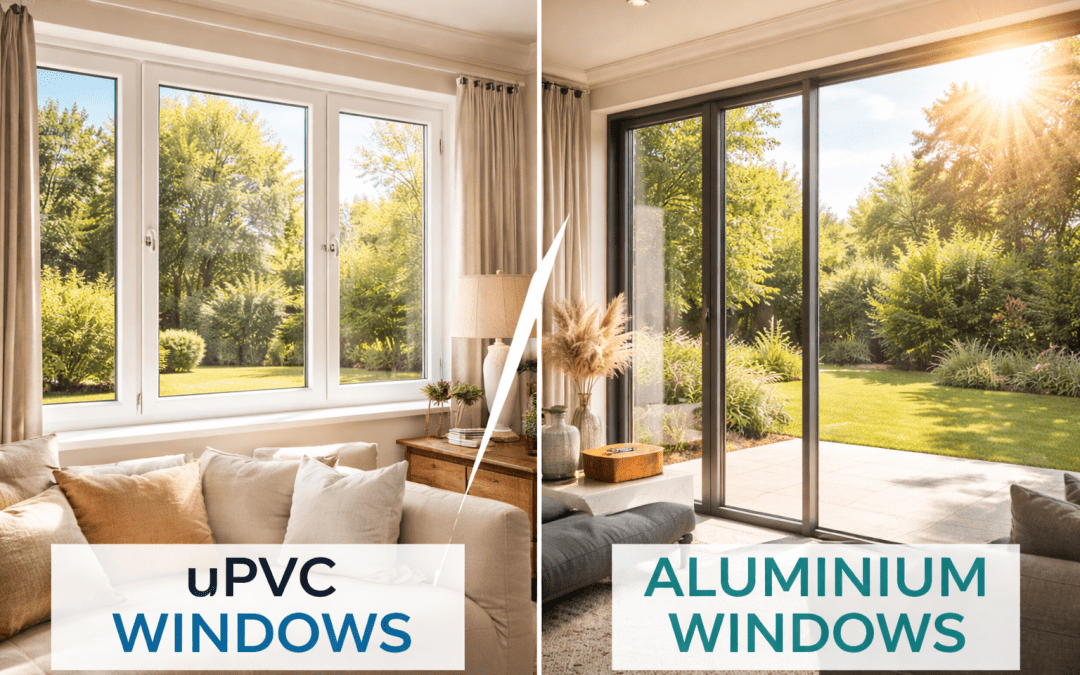
When upgrading your home, one of the first decisions you’ll face is whether to go for uPVC windows or aluminium windows. Both materials have their benefits, but which is right for your property? We’ve put together a practical Q&A to help homeowners in Kettering, Northamptonshire, Market Harborough, and Leicester make an informed choice.
1. What are the main differences between uPVC and aluminium windows?
-
uPVC windows are made from plastic-based profiles with multi-chambered cores for insulation. They’re cost-effective, energy-efficient, and require minimal maintenance.
-
Aluminium windows use thermally broken metal frames. They are stronger, more stable, and allow for slimmer sightlines and larger panes of glass — perfect for modern designs or sun-exposed homes.
For more details on aluminium options, see our [aluminium windows] range.
2. Which performs better in sunny or south-facing rooms?
uPVC can expand and contract slightly in direct sunlight, especially on larger frames or darker colours. Over time, this may affect alignment or hardware performance.
Aluminium windows, by contrast, are dimensionally stable. They resist warping or distortion, making them ideal for sunny aspects or homes with large, south- or west-facing windows.
3. What about thermal efficiency?
Both materials can achieve excellent thermal performance when paired with modern double or triple glazing:
-
uPVC uses multi-chambered profiles to reduce heat transfer.
-
Aluminium relies on a Thermal Break within the frame to prevent heat loss.
In addition to insulation in winter, aluminium windows can also help manage heat gain in summer — keeping rooms more comfortable in sunny climates.
4. Are aluminium windows suitable for large panes or slim designs?
Yes! One of the key advantages of aluminium windows is their strength. Aluminium can support larger glass areas with ultra-slim frames, creating clean, modern aesthetics and letting in maximum natural light — something that can be harder to achieve with uPVC.
5. How do they compare in terms of maintenance and longevity?
-
uPVC windows are low maintenance, resistant to rot, and won’t rust.
-
Aluminium windows are also highly durable, weather-resistant, and colour-stable, even in dark finishes or areas exposed to strong sunlight. Over time, aluminium retains its shape and performance better, especially in large or high-exposure windows.
6. Which should I choose for my home?
-
uPVC is ideal for smaller windows, shaded aspects, or cost-conscious upgrades.
-
Aluminium windows are recommended for larger frames, sunny or south-facing elevations, modern builds, or when you want a slim, architectural look that won’t warp or distort over time.
For a full selection of aluminium options, view our aluminium windows page.
Expert Advice from KP Glass & Windows
At KP Glass & Windows, we help homeowners throughout Kettering, Northamptonshire, Market Harborough, and Leicester choose the best window material for their property. From performance to style and long-term reliability, we ensure you get windows that suit both your home and your lifestyle.
📞 Call us on 01536 525140 to discuss your requirements or request a free quote for aluminium windows or uPVC alternatives.